Natural Robusta: from cherry to kiboko to FAQ
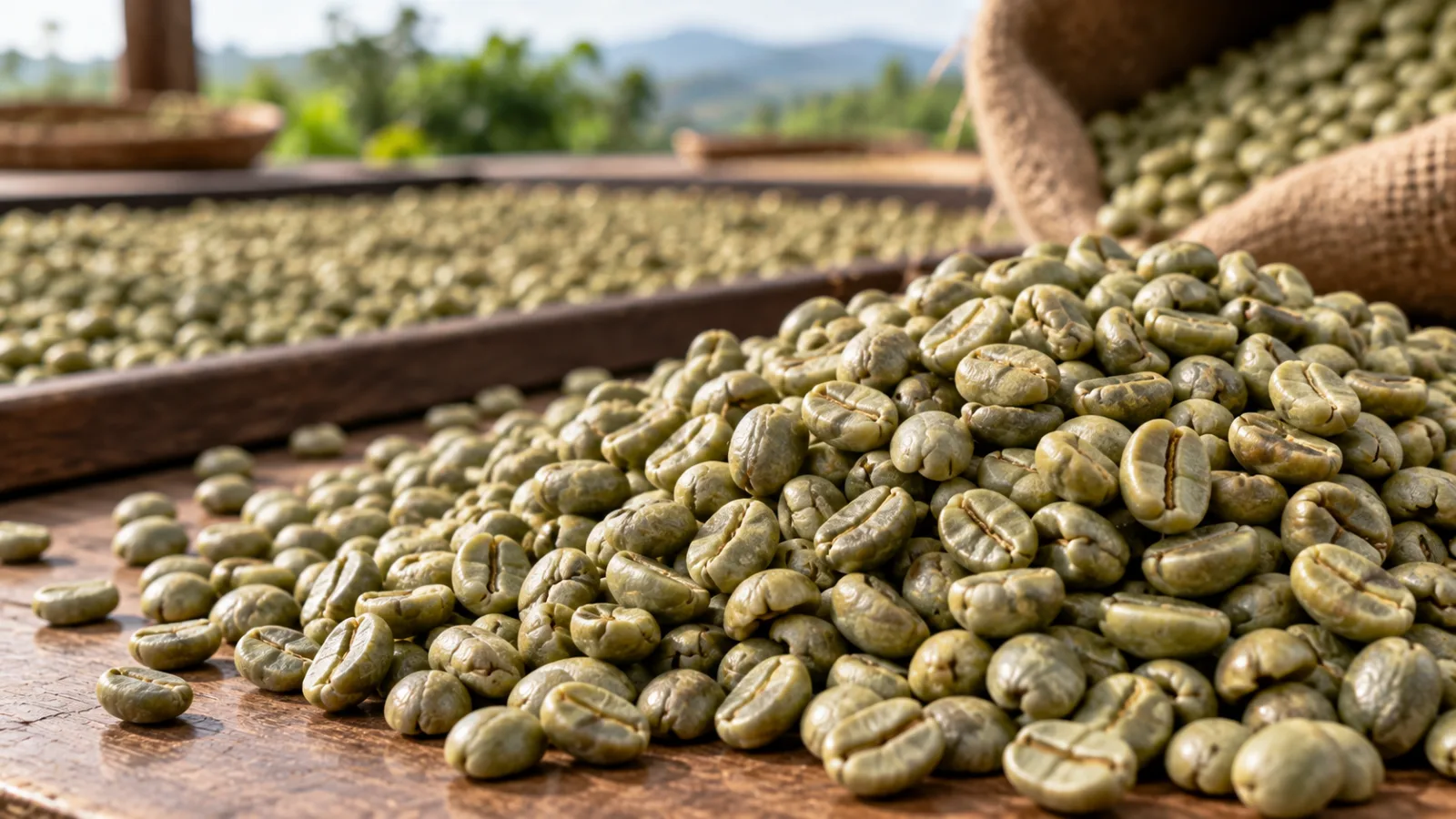
Robusta cherry is picked when red — selectively in better-managed gardens, by strip-picking elsewhere — and dried whole in the sun on tarpaulins, cemented yards or, increasingly, raised beds. Drying takes two to three weeks depending on weather and takes the cherry to about 12–13 percent moisture. The dried cherry, called kiboko, is the form in which most Robusta is sold by farmers to traders and to washing-and-hulling operators.
Kiboko is hulled in a machine that strips the dried skin, pulp and parchment in one pass, leaving green coffee of mixed sizes called FAQ (fair average quality). FAQ is the domestic trading standard and the raw material for export grading. Buyers pay for FAQ against moisture and outturn (the yield of clean coffee), so drying discipline at farm level directly affects what reaches the factory.
Quality risks to ask about: over-fermented or mouldy cherry from slow or wet drying, over-drying, contamination from ground drying, and mixing of immature cherry. Well-run drying on raised beds with regular turning and selective picking produces the clean, sweet Robusta that specialty buyers look for.
Washed Robusta
A small volume of Robusta is wet-processed: ripe cherry pulped the same day, fermented, washed and dried as parchment before hulling. The cup is cleaner and brighter than natural Robusta and the coffee commands a premium — reported export value US$5.01 per kilogram in December 2025 versus US$4.54 for Screen 18 (MAAIF). See single-origin and specialty Robusta.
Fully washed Arabica: Bugisu and Wugar
On Mount Elgon and at washing stations in the Rwenzori and West Nile, ripe cherry is delivered on the day of picking and floated to remove lights and foreign matter. A pulper removes the skin and most pulp; the mucilage-covered beans ferment in tanks for 24–48 hours (longer at altitude) until the mucilage breaks down; they are washed and graded by density in channels, then dried on raised beds for one to two weeks, turned regularly, to about 11–12 percent moisture as parchment. Dry parchment rests in conditioning bins before hulling.
Smallholders without access to a station may pulp at home with a hand pulper and dry parchment in the compound — home-processed washed coffee is more variable than station coffee. Ask whether a washed lot is station-processed or home-processed.
Natural Arabica: Drugar
In the Rwenzori and West Nile much Arabica cherry is dried whole at home, as with Robusta, and sold as dried cherry for hulling. The result, Drugar (dry Uganda Arabica), is heavy-bodied and sweet with lower acidity than washed lots. Drying discipline — thin layers, turning, protection from rain — separates a clean, fruit-forward Drugar from a defect-laden one; defect count and moisture on the grading report tell you which you have. See Drugar and Wugar.
The grading factory
Whatever the process, export preparation happens at a licensed grading (reprocessing) factory, most of them in and around Kampala and Mbale:
- Pre-cleaning and destoning: sieves, aspirators and destoners remove dust, sticks, stones and metal.
- Hulling (for parchment or kiboko arriving unhulled) and polishing where specified.
- Screen grading: a bank of vibrating sieves separates beans by size into the screen grades described on the grades page.
- Density sorting: a gravity table separates heavy, sound beans from lights, floaters and brokens.
- Colour sorting: optical sorters remove blacks, sours and discoloured beans; specialty lots are hand-sorted as well.
- Bagging and marking: 60 kg jute bags, hermetic liners if specified, marked with lot and grade.
- Sampling and inspection: the factory draws the pre-shipment sample; the coffee authority's inspector samples for the quality certificate.
What to ask a supplier about process
Where and how was the cherry dried? Was washed coffee station- or home-processed? What was the moisture at hulling and at grading? Was the lot colour-sorted, and by machine or hand? Can you see the grading and cupping reports? Straight answers to these questions tell you more about a lot than its grade name.
Frequently asked questions
Is Uganda Robusta washed or natural?
Almost entirely natural — dried as whole cherry (kiboko) and hulled. Washed Robusta is a small premium category, 0.09 percent of Robusta exports in December 2025.
What is kiboko?
The Ugandan term for whole coffee cherry dried in the sun until the skin is hard and dark. It is the form in which most Robusta is sold by farmers and is hulled to produce FAQ green coffee.
What does FAQ mean in coffee?
Fair average quality — hulled, ungraded green Robusta as traded domestically in Uganda before export grading. Export grades are produced from FAQ at the grading factory.
Is Bugisu coffee washed?
Yes. Bugisu is fully washed Arabica from Mount Elgon, processed at washing stations or with hand pulpers: pulped, fermented, washed and dried as parchment.
What is the difference between washed and natural Arabica from Uganda?
Washed (Bugisu, Wugar) is pulped and fermented before drying and cups cleaner and brighter; natural (Drugar) is dried as whole cherry and cups sweeter and heavier with lower acidity.