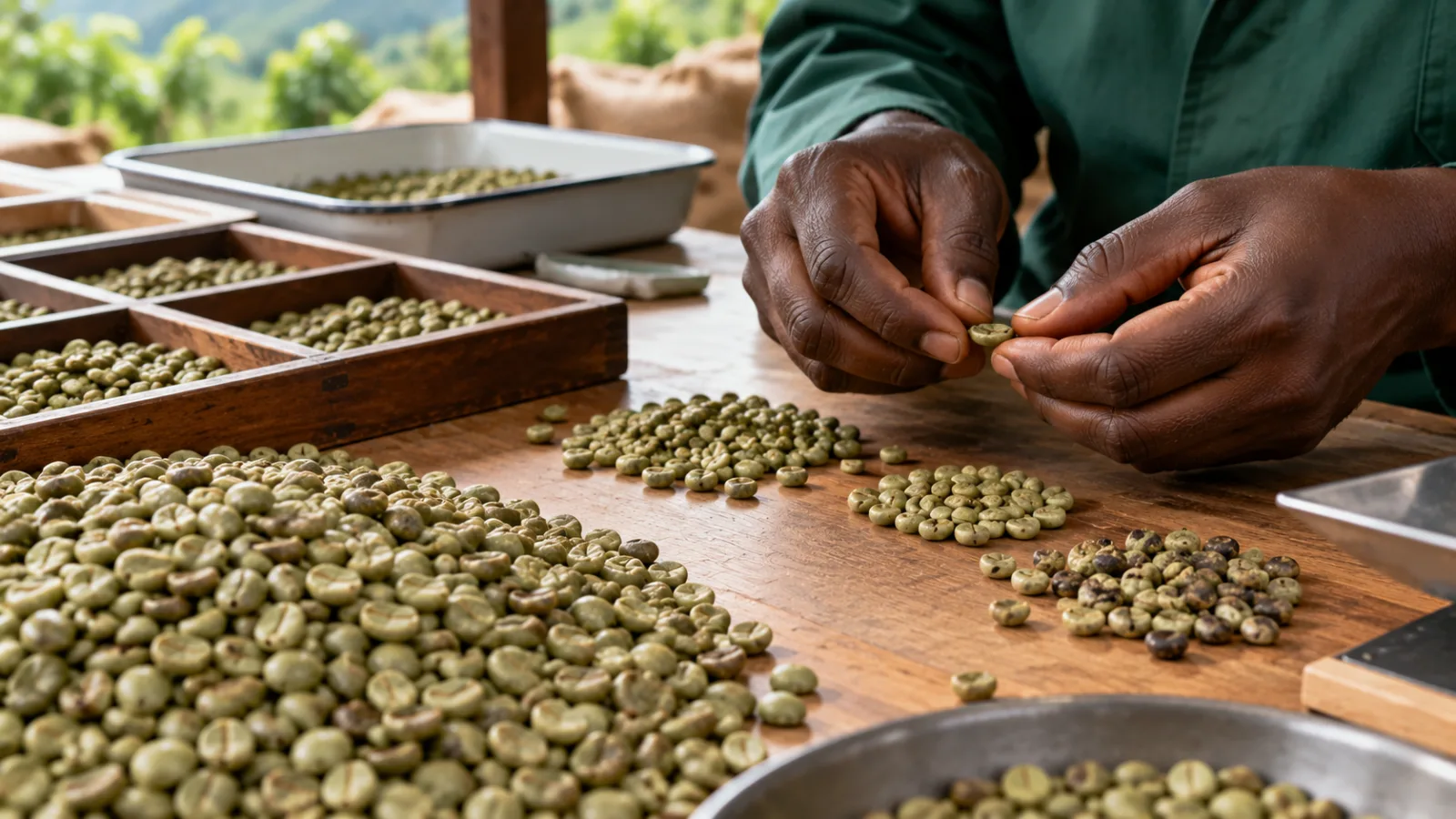
Single-origin Robusta coffee: what we mean
Single-origin here means a Robusta lot from one named source — a district, washing station or farmer group — prepared and sold on its own rather than blended into a grade. It can be washed, honey or natural: a selectively picked, raised-bed-dried natural Screen 18 from one district is a single-origin Robusta just as a washed lot is. Traceability level is stated per lot, and lots are sold in pallet quantities so a roaster can feature the coffee as a 100% Robusta or a high-percentage espresso component.
What makes a Robusta “specialty”
The Coffee Quality Institute's fine-Robusta protocol evaluates Robusta on its own terms rather than against Arabica: fragrance and aroma, flavour, aftertaste, salt/acid and bitter/sweet balance, mouthfeel, uniformity, balance and clean cup, with a green-grade defect standard of zero primary defects. Fine Robusta is sweet, clean and full-bodied without the rubbery or woody notes of commodity grades. Uganda's shade-grown trees at 1,000–1,300 metres, selective picking and wet processing are what get it there. Our guide to fine Robusta for roasters explains the CQI protocol and how to cup and roast it.
Washed Robusta from Uganda
Almost all Uganda Robusta is natural-processed, so washed lots are a deliberate, small-scale effort: ripe cherry picked selectively, pulped the same day, fermented, washed and dried slowly as parchment on raised beds. The cup is brighter and cleaner than natural Robusta, with more sweetness and a lighter body — a Robusta that can be roasted lighter and served as a single origin or a high-percentage espresso component. Honey-process and anaerobic-fermentation Robusta lots are produced by a handful of groups and are available in very small quantities.
Who this is for
- Specialty roasters building a single-origin Robusta or blend programme who want a specialty Robusta with a named source.
- Espresso roasters looking for crema and body without harshness at 20–50 percent of the blend.
- Importers curating a specialty offer list who need small, traceable lots with cupping data.
Cup data and honesty
We publish cup scores and descriptors only from actual cupping reports for the lot on offer. If a lot on this site shows no score, it has not yet been cupped and evaluated — request a sample and cup it yourself, or ask us for the report when it is ready.
Availability
Washed and specialty Robusta lots are prepared from the main harvest (October–February) and typically available from January. Because volumes are small, we recommend requesting a sample early and reserving quantity against the sample.
Standard specification — washed and specialty Robusta
- Process
- Fully washed: selectively picked ripe cherry, pulped, fermented, washed, dried on raised beds as parchment, hulled; honey and anaerobic lots as separate preparations
- Preparation
- Screen 18 or 17/18; hand-sorted; zero primary defects targeted
- Cup (fine Robusta)
- Assessed on the CQI / UCDA fine-Robusta protocol; sweetness, clean cup, body, bitter/sweet balance; scores published only from cupping reports
- Moisture
- Maximum 12.5%; measured value per lot
- Traceability
- Farmer group or washing station named per lot where consent exists
- Packaging
- 60 kg jute with hermetic liner; pallet quantities (e.g. 10–20 bags) for specialty roasters
- Incoterms
- FOB Mombasa; FCA Kampala; door-to-door via importer partners on request
Uganda exported only 0.09% of its Robusta as washed coffee in December 2025, at a reported export value of US$5.01/kg — about 47 cents above Screen 18 (MAAIF export report). Volumes are small and lot-specific.
Current offer list
Available lots in this grade
Offer lists are sent on request and updated through the harvest. Lots are published here once they have been graded and a specification exists, so what you see is real coffee rather than an indicative list.
Tell us the grade, quantity and shipment window you are working to and we reply with what is available or expected from the current harvest, with measured specifications.
Frequently asked questions
What is fine Robusta?
Robusta that meets the Coffee Quality Institute's fine-Robusta standard: zero primary defects in the green grade and a cup score of 80 or more on the Robusta cupping protocol, which assesses sweetness, bitter/sweet balance, clean cup and body. It is a quality tier, not a process; most fine Robusta is washed or carefully prepared natural.
Does washed Robusta taste different from natural Robusta?
Yes. Washed Robusta is cleaner and brighter with more sweetness and a lighter body; natural Robusta is heavier, earthier and more cocoa-driven. Both have low acidity compared with Arabica.
Can I buy a pallet rather than a container of specialty Robusta?
Yes. Specialty Robusta is normally sold in pallet quantities of 10–20 bags, either FOB Mombasa for consolidation by your importer or delivered through an importer partner. Tell us the quantity and destination.
Do you have anaerobic or honey Robusta?
Occasionally, in very small lots. Ask, and we will tell you what is in preparation for the current harvest rather than promising it.
How is a Robusta cup score different from an Arabica score?
Fine Robusta is scored on the CQI/UCDA Robusta protocol, which weights bitter/sweet balance and salt/acid differently from the SCA Arabica form. An 82-point Robusta is a fine Robusta, not an 82-point Arabica; the two scales should not be compared directly.