If you are ready to buy rather than read, our single-origin and specialty Robusta lots are listed with their cupping data.
What "fine Robusta" actually means
The Coffee Quality Institute developed a Robusta cupping protocol and a green-grading standard so that Robusta could be evaluated on its own terms rather than as a failed Arabica. Under it, a fine Robusta has zero primary defects in the green grade — no full blacks, full sours, pods or foreign matter in the sample — and scores 80 or above on a form that weights fragrance and aroma, flavour, aftertaste, salt/acid and bitter/sweet balance, mouthfeel, uniformity, balance and clean cup. The scale is not the SCA Arabica scale: an 82-point Robusta is a fine Robusta, not an 82-point Arabica, and the two numbers should not be compared. Uganda's coffee authority uses a compatible form for its own Robusta grading.
Why Uganda
Robusta is native to the Lake Victoria basin, and Uganda grows it higher than most origins — 900 to 1,300 metres in the central belt and higher in the west — under banana and forest shade, largely from the traditional Nganda and Erecta types alongside Kisansa. Altitude and shade slow maturation and produce denser, sweeter beans; the traditional types have a cleaner, less rubbery cup than many lowland clonal Robustas. Uganda is also Africa's largest coffee exporter, so the infrastructure — grading factories, licensed exporters, Mombasa logistics — exists. What has been scarce is selective picking and careful processing, and that is exactly what the fine-Robusta segment is now paying for.
Washed, honey, natural
Almost all Uganda Robusta is natural-processed: cherry dried whole and hulled. Fine natural Robusta is possible with selective picking, thin-layer drying on raised beds and rigorous sorting, and it cups heavy, sweet and cocoa-driven. Washed Robusta — pulped, fermented, washed and dried as parchment — is a small, deliberate category that cups brighter and cleaner with a lighter body; in December 2025 it was 0.09 percent of Uganda's Robusta exports and commanded a reported export value of US$5.01 per kilogram against US$4.54 for Screen 18 (MAAIF export report, via VirginCoffee, February 2026). Honey and anaerobic-fermentation Robusta lots exist from a handful of groups in very small volumes. Our washed and specialty Robusta page carries the standard specification.
What to ask for in a sample
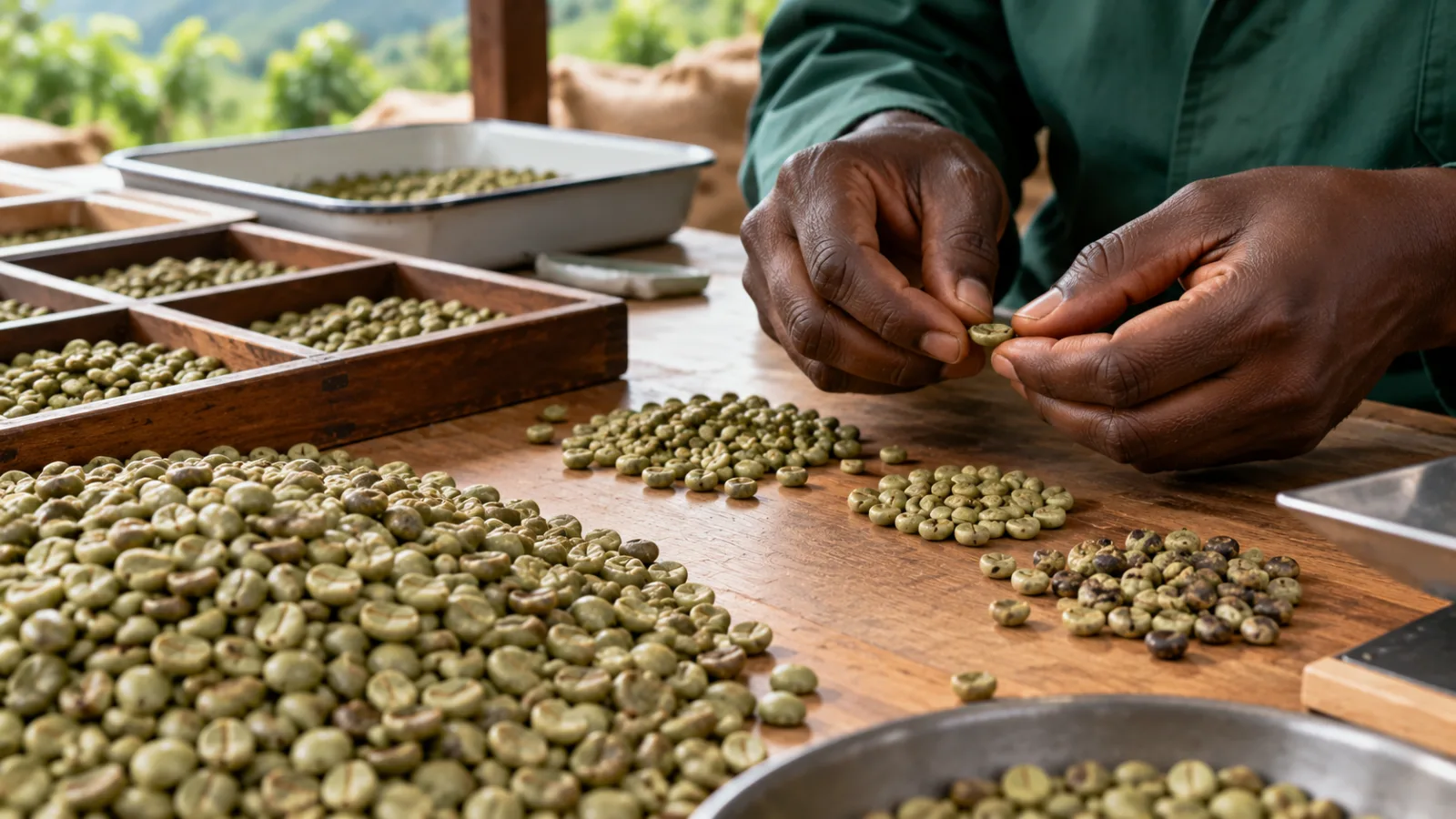
- The grading report: measured moisture (11–12.5 percent is right), defect count per 300 g (zero primaries for fine Robusta), screen retention (Screen 18 or a 17/18 preparation is typical for specialty lots).
- The process and drying method in plain terms — station-washed or home-processed, raised beds or tarpaulins.
- The cupping report, if one exists, and the protocol used. If none exists, cup it yourself and tell the supplier what you found; we publish scores only from reports for the lot on offer.
- Traceability level — farmer group or washing station named, and whether plot geolocation exists (EUDR matters for EU roasters from 30 December 2026).
Our fifteen questions for a Uganda coffee supplier cover the rest.
Cupping and roasting notes
Cup fine Robusta on the Robusta protocol, at the ratio and grind you use for Arabica, but calibrate the table: the bitter/sweet balance is the axis that separates a fine lot from a commercial one. In the roaster, dense high-grown Robusta takes heat well; most roasters find a slightly longer development after first crack brings out sweetness and tames bitterness, and that washed lots tolerate a lighter roast than naturals. For espresso, fine Robusta at 20–50 percent of a blend adds crema, body and cocoa without the rubber and ash of commodity grades; as a single origin it is a legitimate specialty offer in its own right.
Volumes, timing and price
Specialty Robusta from Uganda is sold in pallet quantities — typically 10 to 20 bags of 60 kg — either FOB Mombasa for consolidation by your importer or delivered through an importer partner. Lots are prepared from the main harvest (October to February in the central belt) and are typically available from January; because volumes are small, request samples early and reserve against the sample. Pricing is outright or as a differential to the London Robusta contract; the reported export values above are orientation, not our prices. See the harvest calendar and the importing guide. Current preparations and pallet availability are on the single-origin Robusta page.
The honest caveats
Fine Robusta is still a small share of Uganda's output; cup quality varies with the washing station and the season; and a lot that has not been cupped has not been proven. We say "cup data published when the lot is cupped" rather than borrowing adjectives — and we would encourage you to hold any supplier to the same standard.
Frequently asked questions
What score makes a Robusta "fine"?
Under the Coffee Quality Institute protocol, 80 points or more on the Robusta cupping form with zero primary defects in the green grade. The Robusta scale is separate from the SCA Arabica scale.
Does Uganda produce specialty Robusta?
Yes, in small volumes — washed, honey and carefully prepared natural lots from the central belt and the west, mostly from farmer groups and washing stations that pick selectively and dry on raised beds.
How much specialty Robusta can I buy?
Pallet quantities of 10–20 bags are normal, available from about January after the main harvest. Larger programmes are possible against early reservation.
How should I roast fine Robusta?
Dense high-grown Robusta takes heat well; a slightly longer development after first crack usually improves sweetness. Washed lots tolerate lighter roasts than naturals. Cup on the Robusta protocol to judge results.