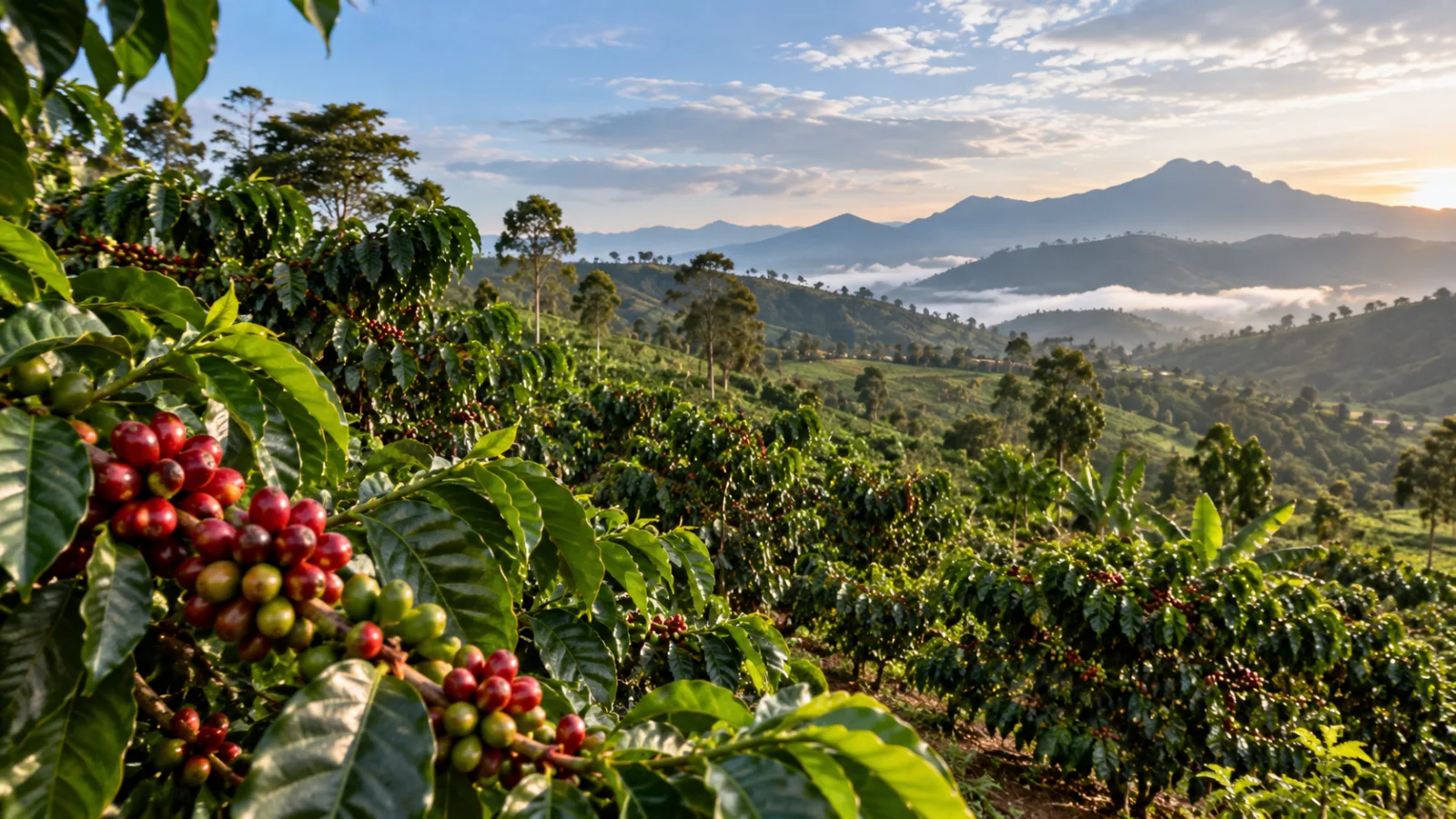
Four zones at a glance
| Zone | Species | Altitude | Main grades | Harvest |
|---|---|---|---|---|
| Central belt (Mukono, Luwero, Masaka, Mityana, Kayunga) | Robusta | 900 – 1,300 m | Screen 18, 17, 15, 12, BHP | Oct – Feb main; May – Aug fly crop |
| Western lowlands and hills (Bushenyi, Kasese, Kamwenge) | Robusta (and Arabica on higher slopes) | 1,000 – 1,500 m | Screen grades; Drugar | Roughly opposite the central belt |
| Mount Elgon (Bugisu, Sipi, Kapchorwa) | Arabica | 1,400 – 2,300 m | Bugisu AA, A, B, PB; Mount Elgon A+ | Oct – Feb |
| Rwenzori (Kasese, Bundibugyo, Kabarole) | Arabica | 1,400 – 2,200 m | Rwenzori AA, Wugar, Drugar | Mar – Jun and Oct – Dec |
| West Nile (Zombo, Nebbi, Arua) | Arabica | 1,300 – 1,800 m | Wugar, Drugar | Two windows, similar to Rwenzori |
Altitude ranges are indicative for the zone; the altitude of a specific lot is stated only where verified.
Why region matters to a buyer
Region tells you process and cup before you open a sample: Mount Elgon means washed Arabica with acidity; Rwenzori means fuller-bodied washed lots and most of the country's natural Drugar; the central belt means natural Robusta with body and cocoa. Region also tells you when fresh crop ships and — increasingly — what traceability data exists, because Uganda's national farmer registration and plot mapping programme covers all of these zones. Regional pages link to the grades grown there and to lots on offer.